
Last updated October 15, 2026
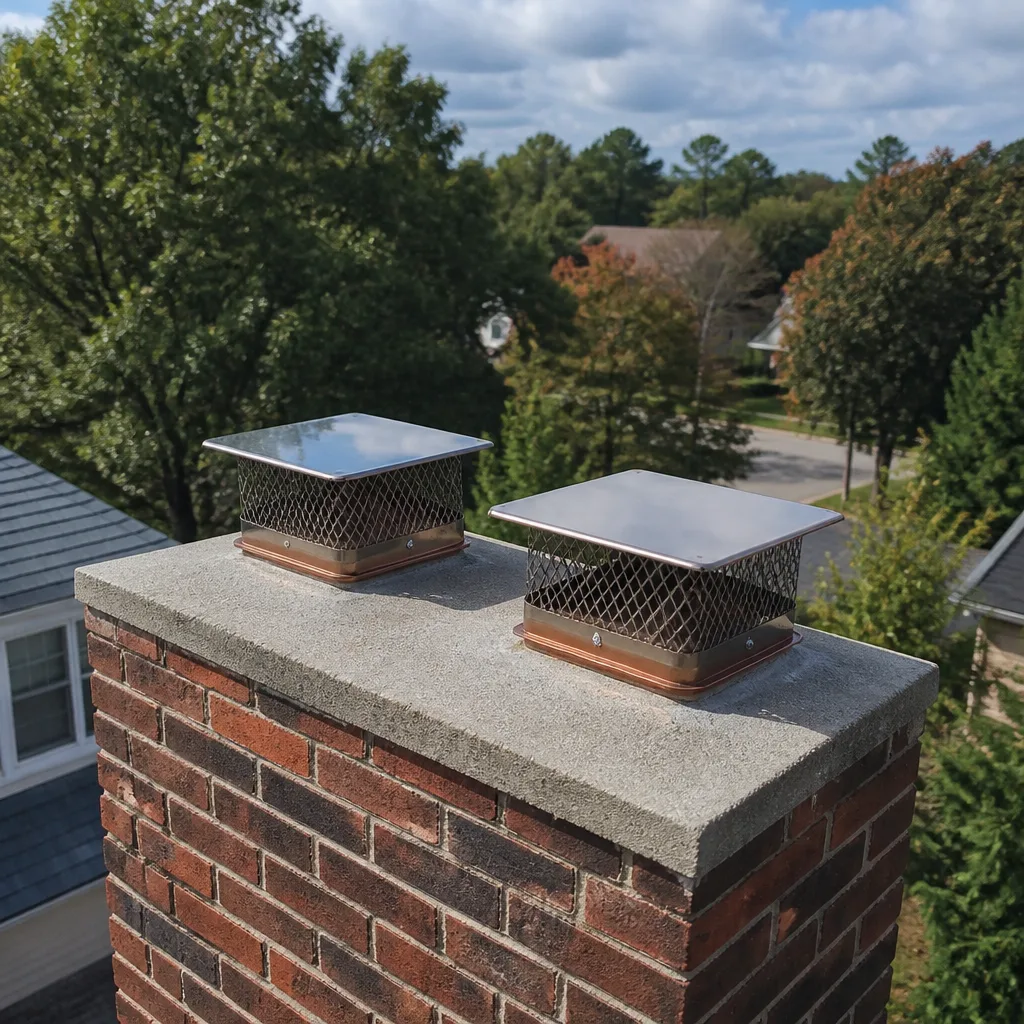 Sweep & inspection
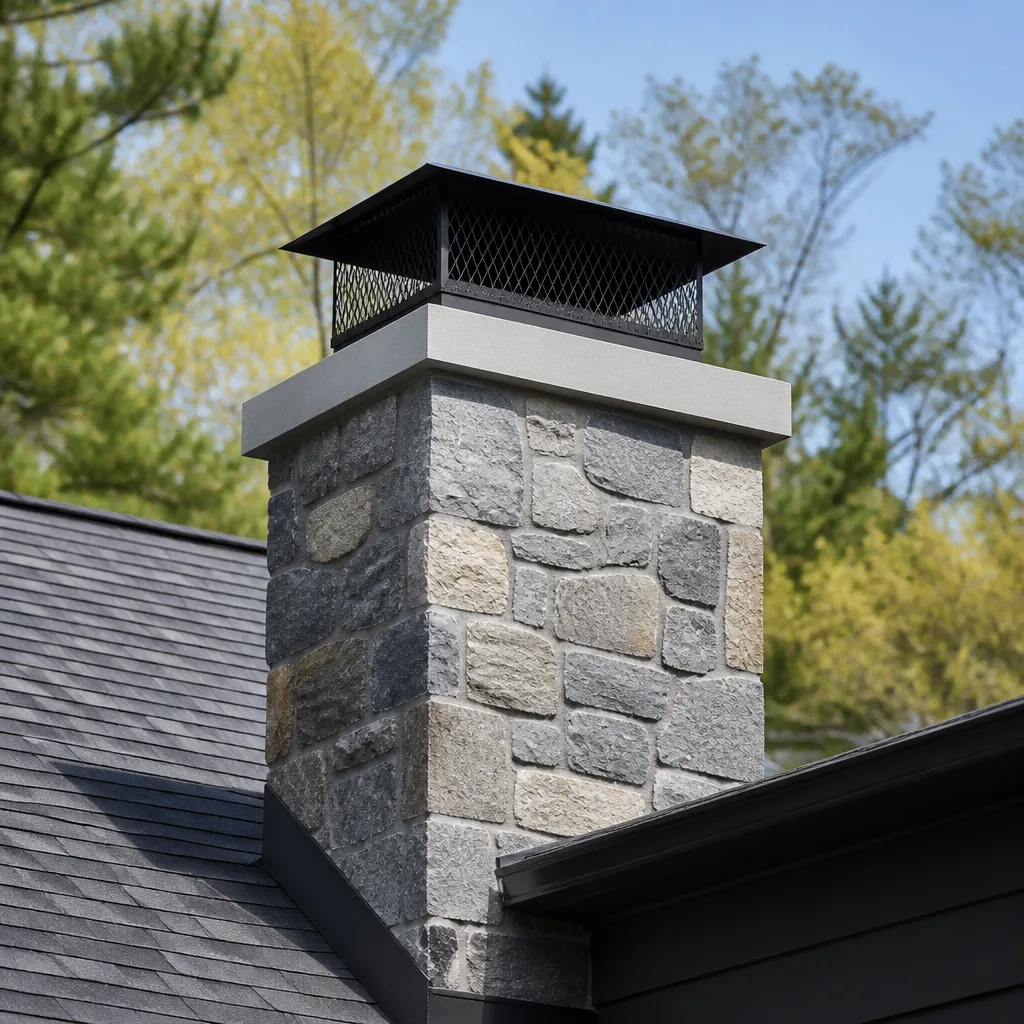 Caps & crowns
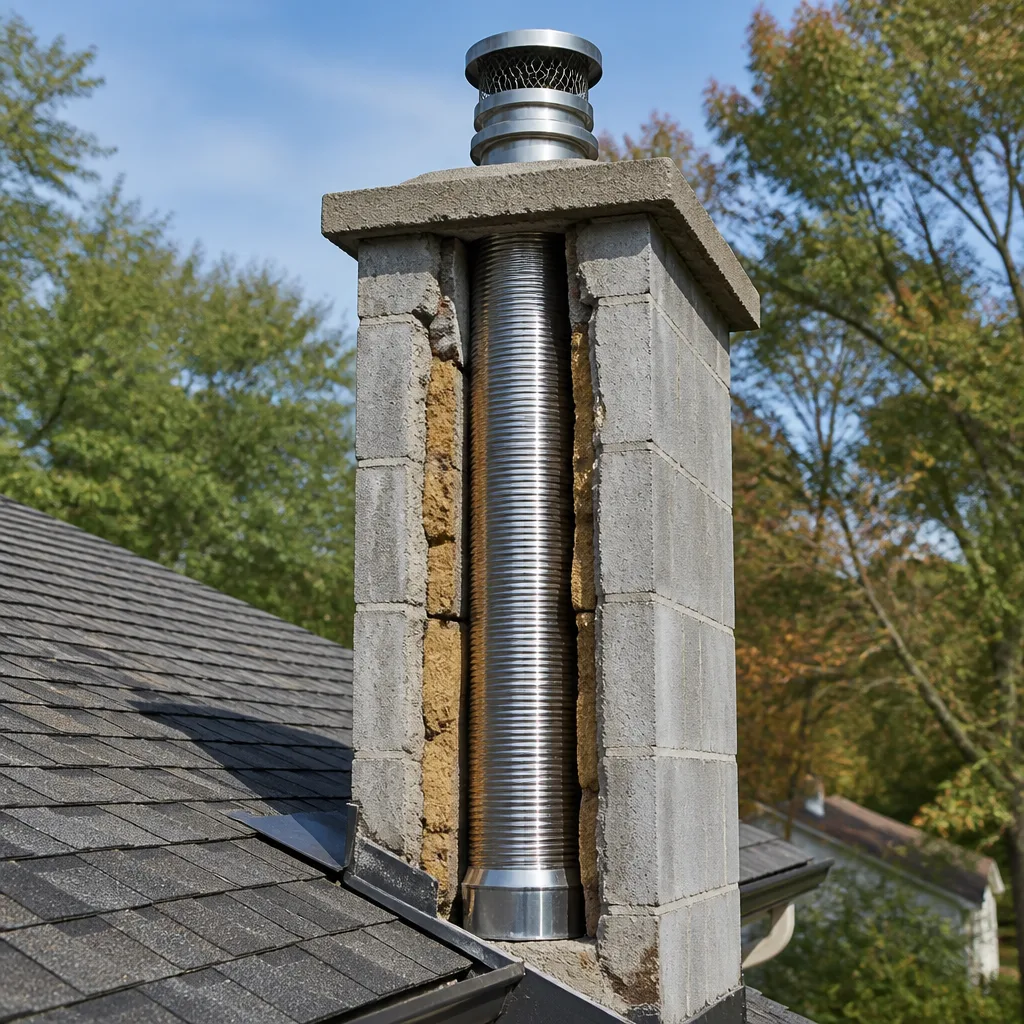 Flue relining
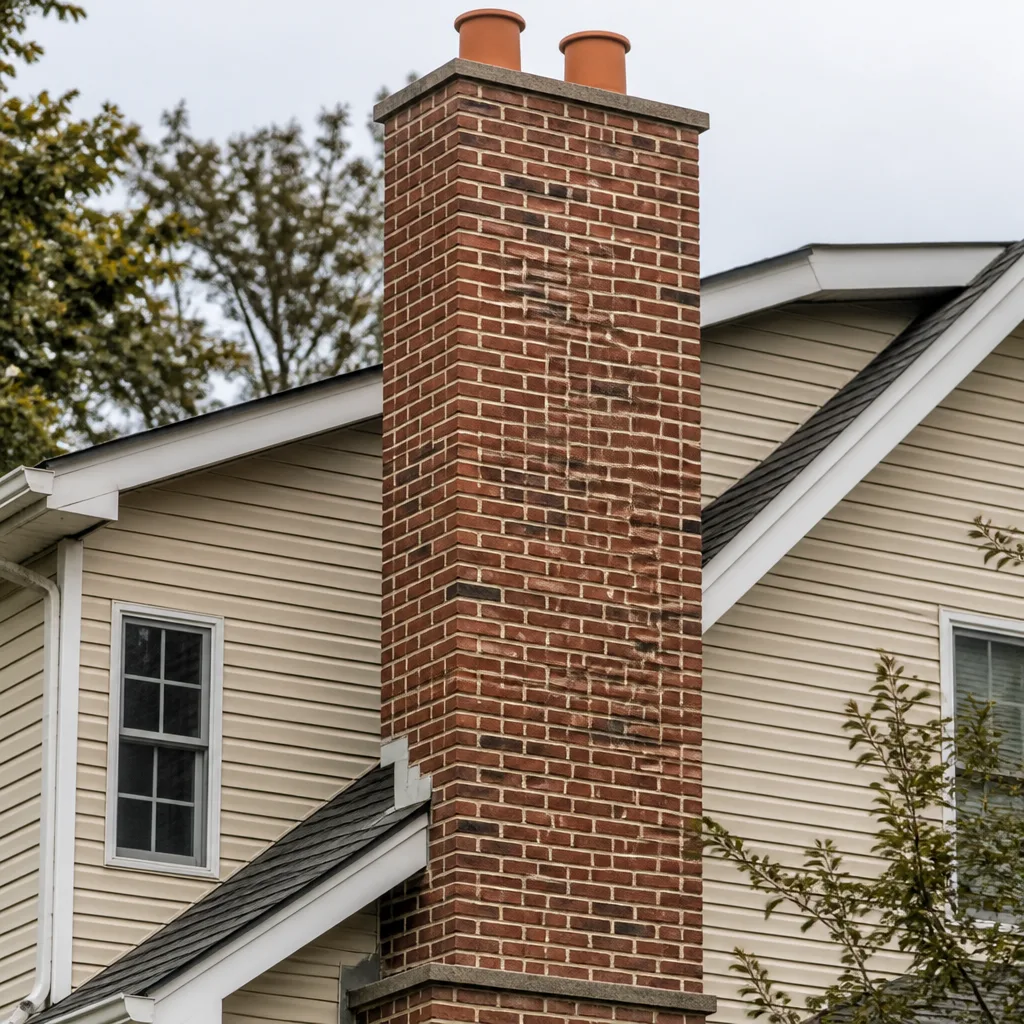 Masonry repair
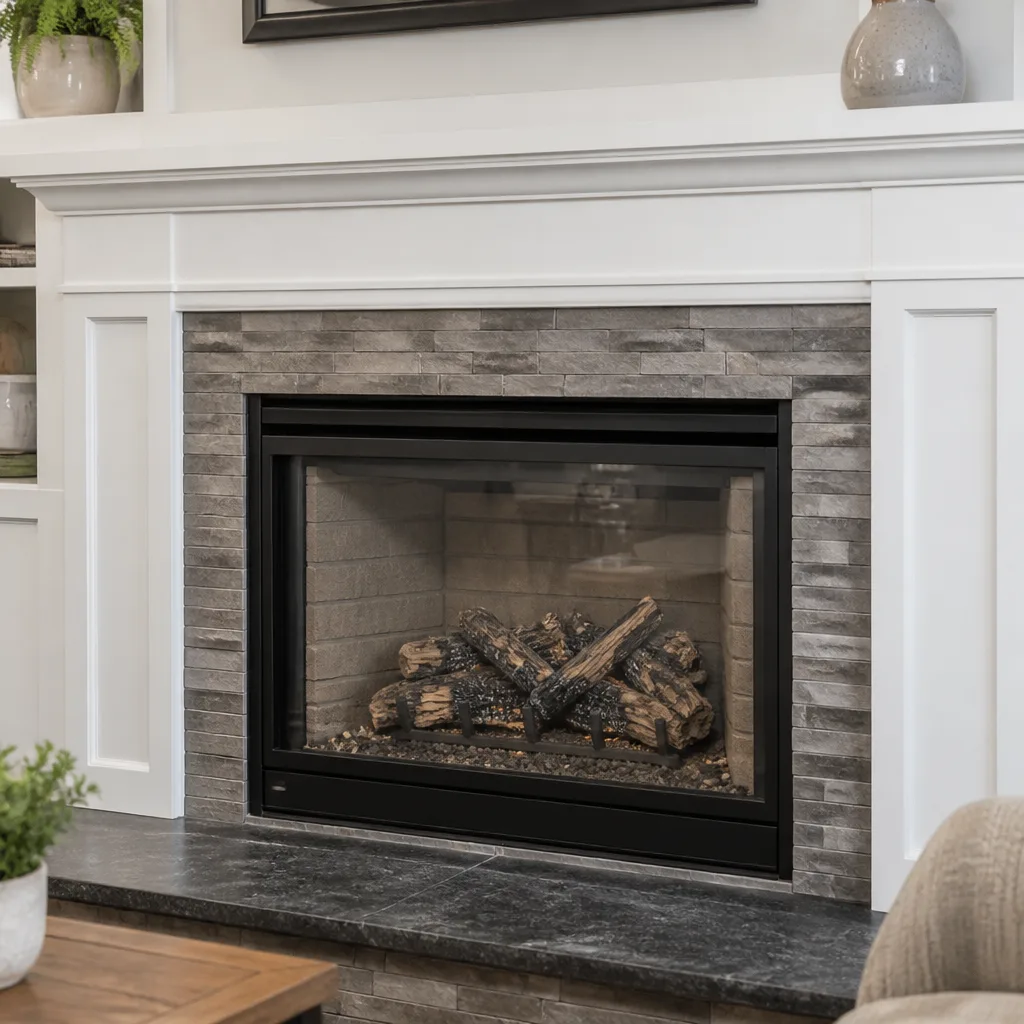 Gas fireplace service
Level 1 sweep and inspection to the NFPA 211 annual standard - flue, crown, cap, and flashing checked and photographed
Chimney sweep logs do not sweep chimneys. They loosen some creosote - which then falls where a brush and vacuum still have to collect it.
Chimney Cleaning Permits, Codes & Inspections in CA: What You Need to Know
Most homeowners assume any work on a chimney follows the same rules. That assumption gets expensive. In California, routine chimney cleaning sits completely outside the permit system, while the repairs a sweep often discovers during that cleaning trigger permits, inspections, and code compliance that can add thousands to the job. What starts as a $250 sweep in Pasadena can become a $6,000 relining project the moment a camera finds a cracked flue liner, and state code has specific things to say about how that work gets done. This guide-along with our Complete Guide to Chimney Cleaning in Pasadena-lays out exactly which chimney work requires a permit in California, which doesn’t, and how to protect yourself when a contractor tells you the scope just changed.
Quick Answer
Chimney cleaning in California does not require a permit, a license specific to chimney work, or a mandatory inspection. What does require permits are structural repairs: flue relining, firebox reconstruction, crown replacement, and in some jurisdictions, cap replacement with certain materials. The governing documents are the California Residential Code (CRC), local amendments like Pasadena’s fire-hazard-zone requirements, and NFPA 211, which isn’t law but functions as the professional standard every insurer and court uses when something goes wrong.
Styles & brands we work with
Table of Contents
- What Chimney Work Is Permit-Exempt in California
- What Chimney Work Requires a Permit
- NFPA 211: The Standard That’s Not a Law But Acts Like One
- Pasadena-Specific Code Amendments: Wildfire Zones and Your Chimney
- The Role of the LA County Fire Department in Chimney Inspections
- How to Confirm a Permit Was Properly Closed Before You Pay
- What Permits and Code-Compliant Repairs Actually Cost
What Chimney Work Is Permit-Exempt in California
Under the California Residential Code (CRC), sweeping, brushing, scrubbing, and visual inspection of a chimney require no permit of any kind. The code treats cleaning as maintenance, not construction. A sweep can remove creosote, scrub the flue with wire or poly brushes, run a camera up the flue, and hand you a report without ever pulling paperwork. The same goes for minor repointing: repacking eroded mortar joints that are shallower than about half an inch is considered cosmetic repair in most jurisdictions and slips under the permit threshold.
Here is a plain list of chimney services that do not require a permit anywhere in California:
- Chimney sweeping and creosote removal: mechanical brushing, HEPA vacuuming, chemical creosote treatments like those applied during a Gelco-certified sweep.
- Level 1 and Level 2 chimney inspections: visual checks and camera-scope inspections, including after a chimney fire or before a property sale.
- Minor repointing of mortar joints: replacing shallow, surface-level mortar erosion without rebuilding the masonry structure.
- Chimney cap cleaning and minor cap adjustment: removing debris, cleaning the cap screen, re-securing an existing cap that has come loose but is not being replaced.
- Waterproofing the exterior masonry: applying a breathable masonry sealant to the chimney’s exterior surface.
- Damper lubrication and simple component replacement: replacing a damper plate or handle using the existing opening, without altering the firebox structure.
What matters is the distinction between servicing and altering. Cleaning a flue, inspecting it, and treating surface-level masonry wear are all service actions. Once you start replacing the liner, rebuilding the smoke chamber, or reshaping the crown, you have crossed into structural work, and the California Residential Code takes over. This is why a Chimney Sweep in Pasadena that does a thorough job will flag issues but should never start structural repairs without confirming permit status. A sweep finding that a chimney is clean and sound can hand you a written report and close the file. A sweep finding a crack, a gap, or a separation has just entered different territory.
What Chimney Work Requires a Permit
Any structural alteration to a chimney requires a building permit under the CRC. This isn’t a gray area. Replacing a flue liner, rebuilding a firebox, pouring a new crown, or reconstructing a masonry chimney from the roofline up all count as construction, and construction requires permit review by your local building department so that the work can be checked against code. The City of Pasadena’s Building and Safety Division enforces this through the same California Residential Code every other city uses, with local amendments we’ll get to shortly.
Here’s what typically triggers a permit in California:
- Flue relining: replacing a cracked clay tile liner with a new stainless steel liner such as a DuraFlex or Olympia Chimney system, or applying a product like HeatShield to repair smaller cracks in an existing liner.
- Firebox reconstruction: rebuilding the angled walls of the firebox, the area where the fire actually burns, when the firebrick has deteriorated.
- Crown replacement: demolishing and re-forming the concrete crown that caps the masonry chimney, the slab that sits on top and sheds water away from the flue.
- Chase and cap replacement on factory-built units: when a prefabricated chimney’s metal chase top or cap is replaced, especially when the new cap involves material changes that must comply with local fire hazard standards.
- Smoke chamber parging: applying mortar to smooth the smoke chamber walls above the firebox, which changes the interior geometry and affects draft performance.
- Demolition and partial rebuild: taking down damaged masonry courses and rebuilding them.
Here’s the counterintuitive part most homeowners miss in Pasadena: the permit isn’t tied to what the chimney services cost. A $300 cap replacement can require a permit while a $500 intensive cleaning does not. Permit status isn’t about price or crew size or whether the work is done from a ladder. It is about whether the structure of the chimney is being changed. When a sweep recommends relining and says it’s about six hours of work, they’re describing the construction portion. The permit is a separate obligation that goes to the city, and it exists so an inspector verifies the new liner meets clearance-to-combustibles requirements, is sized correctly for the flue, and attaches properly at both ends. The permit process is not red tape; it’s the only independent check that the contractor did what they said they did.
NFPA 211: The Standard That’s Not a Law But Acts Like One
NFPA 211 is the National Fire Protection Association’s standard for chimneys, fireplaces, vents, and solid fuel-burning appliances. It is not a California law. It is not adopted into the California Residential Code in full, and no building inspector can write you a citation for violating it. But NFPA 211 is the professional standard every insurance company references when deciding a claim, and the standard every court references when deciding who was negligent after a chimney fire. In practical terms, a chimney sweep who works to NFPA 211 is working to the standard your homeowner’s insurance policy quietly assumes you’re following.
Here’s what NFPA 211 actually says that matters to a Pasadena homeowner:
- Sweep frequency: chimneys, fireplaces, and vents should be inspected at least once a year and cleaned as needed. The standard is inspection-based, not a blanket “clean every year” rule, though for fireplaces used weekly during winter, annual cleaning is common.
- Levels of inspection: Level 1 is a visual check for a chimney that’s been in continuous service under the same conditions. Level 2 adds camera inspection and is required when a property changes hands, after a chimney fire, or after a seismic event. Level 3 is invasive, involving opening walls or chasing, and is reserved for suspected hidden damage.
- Clearances: the standard specifies minimum distances between chimney components and combustible materials like wood framing. These clearances are why a liner replacement is not a handyman task; a stainless liner installed too close to framing is a future house fire in waiting.
- Repair not cleaning: NFPA 211 explicitly states that if an inspection reveals a condition that makes continued use unsafe, the chimney should not be used until the repair is made. A sweep working to this standard will tell you plainly when a chimney is unsafe to burn in.
How do you know if a sweep works to NFPA 211? Ask two questions: “Do you inspect to NFPA 211 Level 2 standards with a camera before you clean?” and “Will you put your findings in writing with photos?” A sweep who says yes to both is operating at the professional standard. One who says a camera isn’t necessary or a written report isn’t standard is not. The written report matters more than homeowners realize: it becomes the evidence trail if a problem later develops, and it’s what an insurance adjuster will ask to see.
Pasadena-Specific Code Amendments: Wildfire Zones and Your Chimney
Pasadena sits at the foot of the San Gabriel Mountains, and significant portions of the city fall within California’s High Fire Hazard Severity Zones (HFHSZ) or the city’s Wildland-Urban Interface (WUI) boundaries. The California Residential Code grants local jurisdictions authority to adopt amendments that strengthen fire-resistance requirements in those zones, and Pasadena has exercised that authority. This is where city-specific rules bite, and they mostly affect cap materials, spark arrestor requirements, and chase construction on factory-built chimneys.
Here’s what Pasadena’s fire-zone amendments mean in practice:
- Spark arrestors: In WUI-designated areas, mesh spark arrestors on chimney caps are not optional; they must meet a maximum opening size specified by the city’s fire code. If a sweep recommends replacing a cap, the replacement cap must carry a spark arrestor that meets this spec.
- Cap materials: Certain plastic or low-temperature-rated cap components that might pass in other jurisdictions are non-compliant in a fire hazard zone. Metal components dominate. A cap specified for a home in the San Rafael Hills has to account for this.
- Chase materials on factory-built chimneys: If the home has a wood-framed chimney chase (the boxy enclosure around a prefabricated metal flue), the chase top and exterior materials in WUI zones face stricter requirements than elsewhere in Pasadena.
- Fuel and vegetation clearance: While technically enforced by the fire department rather than the building department, the same WUI logic extends to clearance requirements around the chimney exit point on the roof.
This is why a local Pasadena chimney contractor matters. A contractor who works across Los Angeles County may not know that a home off Linda Vista Avenue sits inside the city’s WUI boundary, or that the cap the homeowner picked from a catalog won’t pass a Pasadena inspection if the permit is pulled. A contractor who works in Pasadena regularly knows to check the fire hazard overlay before spec’ing the cap. The mistake is almost never caught at the time of installation. It’s caught when the city inspector looks at the permit application and marks it non-compliant, adding weeks and cost to a job that’s already under contract. The Chimney Inspection in Pasadena report should note whether the home falls in a WUI zone, because it changes what materials are approvable before the permit is even filed.
The Role of the LA County Fire Department in Chimney Inspections
The Los Angeles County Fire Department does not inspect chimneys after a routine cleaning, and no California law requires a fire department sign-off for a standard sweep. But LAFD becomes involved in two specific scenarios, and homeowners should know how each works because they are often referred to as “chimney inspections” in a way that conflates very different processes.
The first scenario is after a structure fire. If a fire starts in or near a fireplace or chimney, the fire department investigates the origin. If they determine the chimney contributed to the fire, they may issue findings that get forwarded to the insurer and, in some cases, to the local building department. This is not a code-compliance inspection; it’s an origin-and-cause investigation. The homeowner’s next step is not another fire department visit. It’s a Level 2 or Level 3 inspection by a qualified chimney professional, who documents the damage and specifies what repairs meet code before the chimney can be used again.
The second scenario is public safety outreach. LAFD periodically issues advisories during high-fire-danger periods reminding homeowners in hillside and canyon areas to have chimneys inspected and cleaned before winter. These are educational, not regulatory. A flyer from LAFD saying “have your chimney swept” is not a mandate, and it doesn’t mean the fire department will show up to check. What does trigger a mandatory clearance is rebuilding: if a home in Pasadena is undergoing significant renovation and the chimney is part of the work, the LA County Fire Department may require brush clearance and access verification around the chimney as part of the overall project.
Here’s the practical point. There are three separate entities that touch chimneys in Pasadena: the City of Pasadena Building & Safety Division (permits and code), the city’s own Pasadena Fire Department through its WUI inspection program (some hillside homes do get periodic defensible-space inspections that can flag chimney spark arrestors), and the LA County Fire Department (origin-and-cause investigations after fires, plus brush-clearance enforcement in unincorporated areas). They don’t overlap cleanly, and a homeowner who assumes the fire department “cleared” the chimney after a sweep is making an assumption that can cost them later. The only inspection that matters for code compliance is the one done by the city building inspector on permit-required work, and the only inspection that matters for safety is the one done by a qualified sweep with a camera. When we rebuild a firebox in Pasadena, the city building inspector comes out, approves the work, and the permit gets finaled. That’s the sequence.
How to Confirm a Permit Was Properly Closed Before You Pay
A permit that’s pulled but never finaled is worse than no permit at all. It sits as an open item on the property’s record, and when you go to sell the house, the open permit becomes a negotiation chip in the buyer’s favor. In Pasadena, open permits are discoverable in a standard title search, and closing an old, abandoned permit is a process that involves re-inspection and often re-work to bring the job up to current code. Here’s the sequence to follow before you make the final payment on any permitted chimney work:
- Ask for the permit number before work begins. Pasadena’s Building and Safety Division issues permits with a record number. If the contractor says a permit isn’t needed, get that in writing with the reason. If the work involves relining, firebox rebuild, or crown replacement, “not needed” is a red flag.
- Verify the permit is active. You can check Pasadena’s online permit portal by address. A pulled permit shows as issued. If the contractor says they pulled it and you can’t find it, ask for the permit copy. Legitimate contractors provide it without hesitation.
- Track the inspection. Permitted work almost always requires at least one rough inspection and one final inspection. Ask when the rough is scheduled and whether you can be present. You have the right to be at your own house for an inspection.
- Confirm the final. After the work is done, the city inspector signs off, and the permit status changes to “finaled.” Ask the contractor to email you the finaled permit documentation or verify it through the city’s portal yourself. This is a two-minute check.
- Make final payment only after the final. A contractor who wants progress payments through the project is reasonable. A contractor who wants full payment before the final inspection is asking you to carry the risk of non-compliant work. Under The Garrison Standard, the price and scope are in writing before we start, but the final payment is not due until the work is done and documented.
This is not about distrusting contractors. It’s about a paper trail. A properly closed permit confirms that a third party, the city inspector, looked at the work and found it code-compliant. A Chimney Repair in Pasadena company that does its permits correctly will have no problem with any of the five steps above. One that resists any of them is telling you something about how the job will go.
What Permits and Code-Compliant Repairs Actually Cost
Permit fees in Pasadena for typical chimney work run from roughly $150 to $500 depending on the valuation of the work, with the permit fee calculated as a percentage of the project cost. The permit itself is a small fraction of the overall bill on a major repair, but it’s not zero, and a contractor who buries “permits included” in the quote without line-iteming the fee is removing your ability to verify it. Here’s what the full picture looks like for common chimney jobs in the Pasadena area:
- Chimney sweep (permit-exempt): $200 to $350 for a standard one-flue masonry chimney. Creosote-heavy flues or those serving wood stoves with heavy buildup land at the higher end.
- Level 2 camera inspection (permit-exempt): $150 to $400, sometimes rolled into the sweep price if done in the same visit. Our inspections are documented with photos and a written report included.
- Minor repointing (generally permit-exempt): $400 to $900 for surface mortar joint replacement on a typical two-story chimney.
- Chimney cap replacement (permit status varies by scope and WUI location): $300 to $1,200 including parts and labor. In Pasadena’s fire hazard zones, expect the cap to include a compliant spark arrestor, which adds to the materials cost. Famco and Olympia Chimney both manufacture caps that can meet these specifications.
- Flue relining (permit-required): $3,500 to $7,000 for a stainless steel liner system such as DuraFlex sized to an existing masonry flue. The spread depends on flue height, accessibility from the roof, and whether the old clay liner has to be broken out first. HeatShield, which repairs rather than replaces a liner, runs $2,000 to $4,000 but has application limits.
- Crown replacement (permit-required): $1,200 to $3,000, again depending on chimney size and roof access.
- Firebox reconstruction (permit-required): $2,500 to $6,000 depending on the extent of firebrick replacement and whether the smoke chamber needs parging at the same time.
These are ranges based on what we see across Pasadena, including the hillside neighborhoods above the Rose Bowl and the flatter lots north of the 210. Roof pitch, chimney height, and access all move numbers. A three-story chimney with a steep roof in the San Rafael Hills costs more to work on than a single-story ranch chimney off Orange Grove Boulevard, purely on access and safety equipment. If a price comes in dramatically under these ranges, ask what’s being left out. The most common omission is the permit itself. The second most common is disposal and cleanup, which can add $100 to $250 on large masonry jobs. Under The Garrison Standard, the written price includes everything: the work, the permit fee if applicable, the disposal, and the cleanup. The number you approve is the number you pay. No additions, no adjustments at the door, and if a covered repair fails within one full year, we return at no charge under the 365-Day Done Right Promise.
Common Mistakes to Avoid
- Assuming a sweep “cleared” the chimney for safety. A cleaning removes creosote. It does not verify structural soundness. Only a camera inspection can confirm the liner is intact and clearances are proper. A clean chimney can still be an unsafe chimney.
- Paying a contractor to pull a permit and never verifying it. Some less scrupulous operators charge for permits they never file. You discover the problem when a city notice arrives or a disclosure report flags an unpermitted repair. Check the permit portal before paying the final draw.
- Installing a non-compliant cap in a Pasadena fire hazard zone. A cap that fails WUI spark arrestor requirements will be flagged on inspection, and you’ll pay twice: once for the wrong cap, once for the right one. Specify the compliance requirement before the part is ordered.
- Treating NFPA 211 as a legal technicality. It isn’t a code. It’s the standard your insurance company will ask about after a loss. A sweep that doesn’t work to it leaves you exposed in ways no permit covers.
- Putting off a $450 repair into a $5,000 one. Cracked crowns, failing mortar, and deteriorated flashing are all progressive. What starts as water intrusion becomes spalled brick, then structural instability. Annual inspections catch these at the low-cost stage.
- Hiring the cheapest bid on structural work and skipping the written scope. A low bid with no written scope is a blank check pointing in the other direction. The Garrison Standard exists because we’ve seen too many jobs where the price moved after the chimney was already open. Get the scope in writing before the first tool comes off the truck.
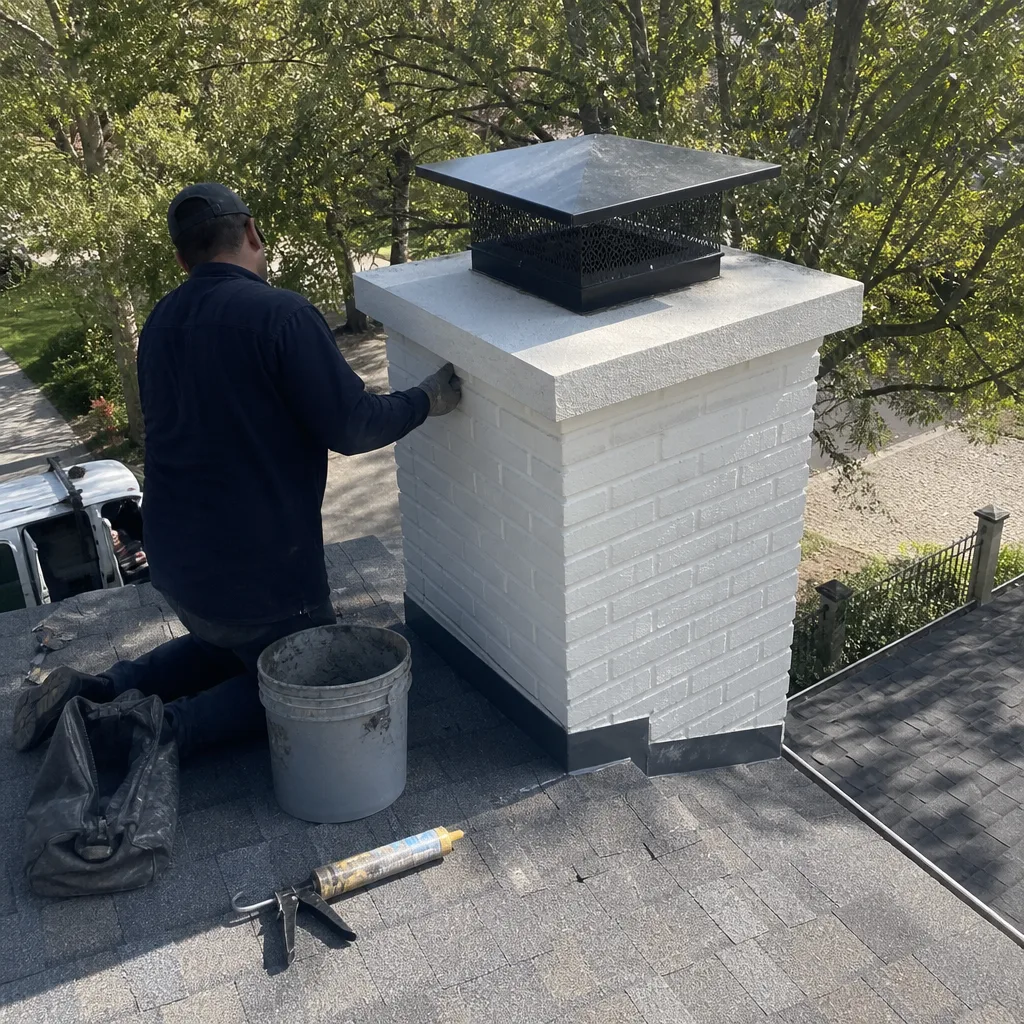
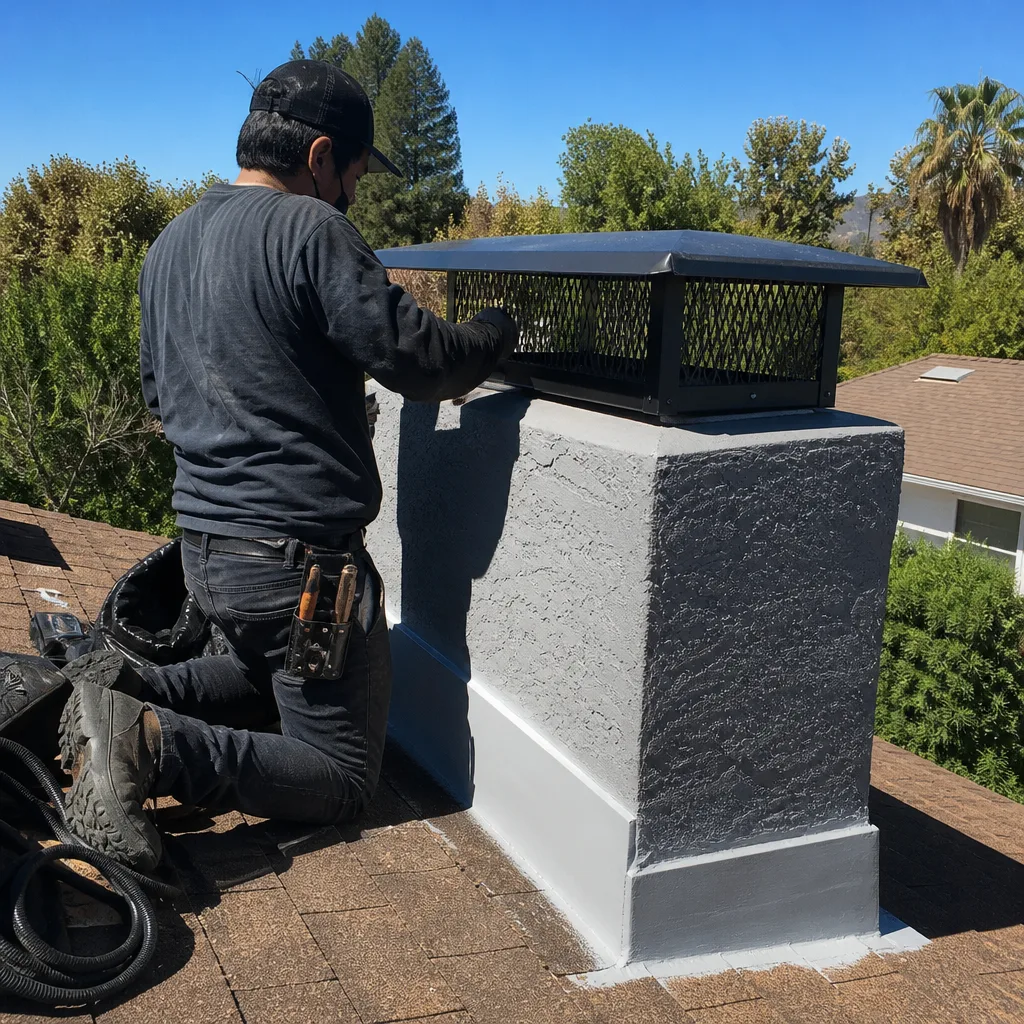
See the difference
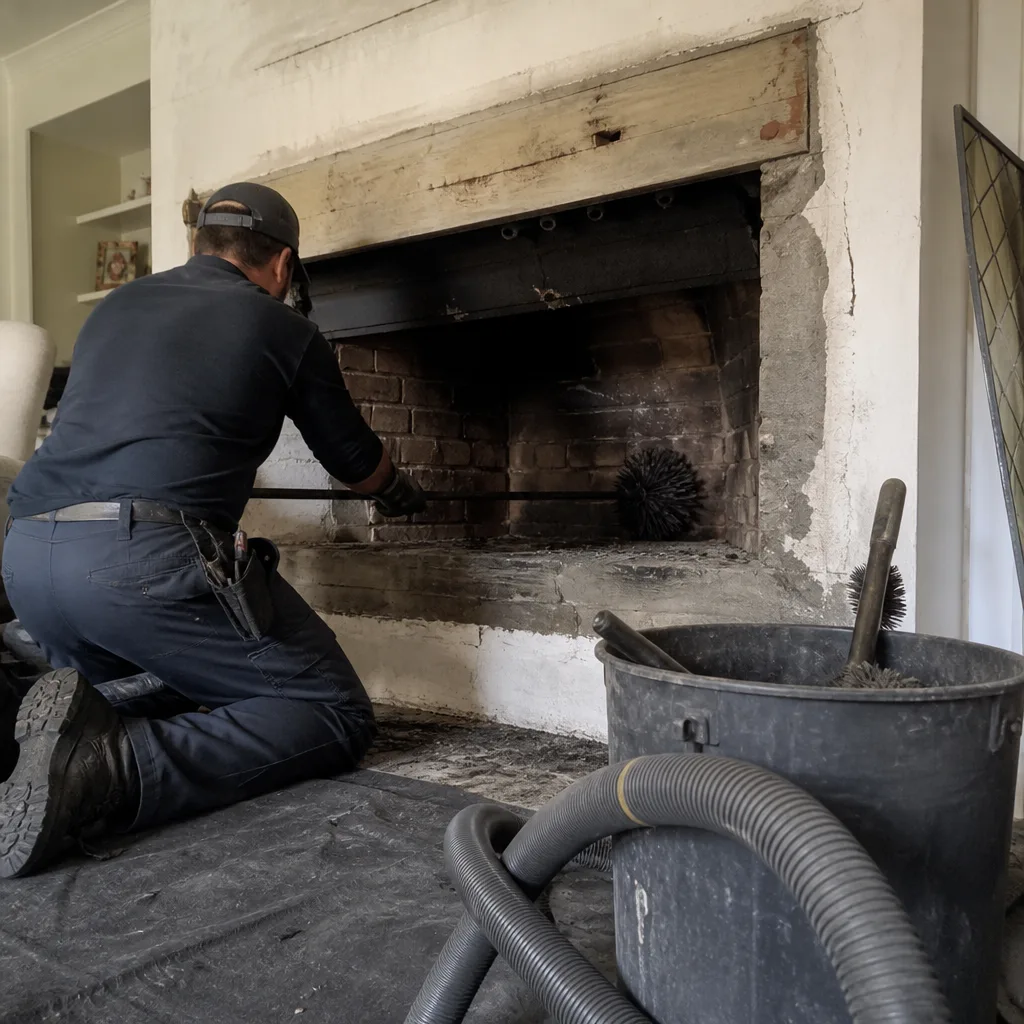 Before
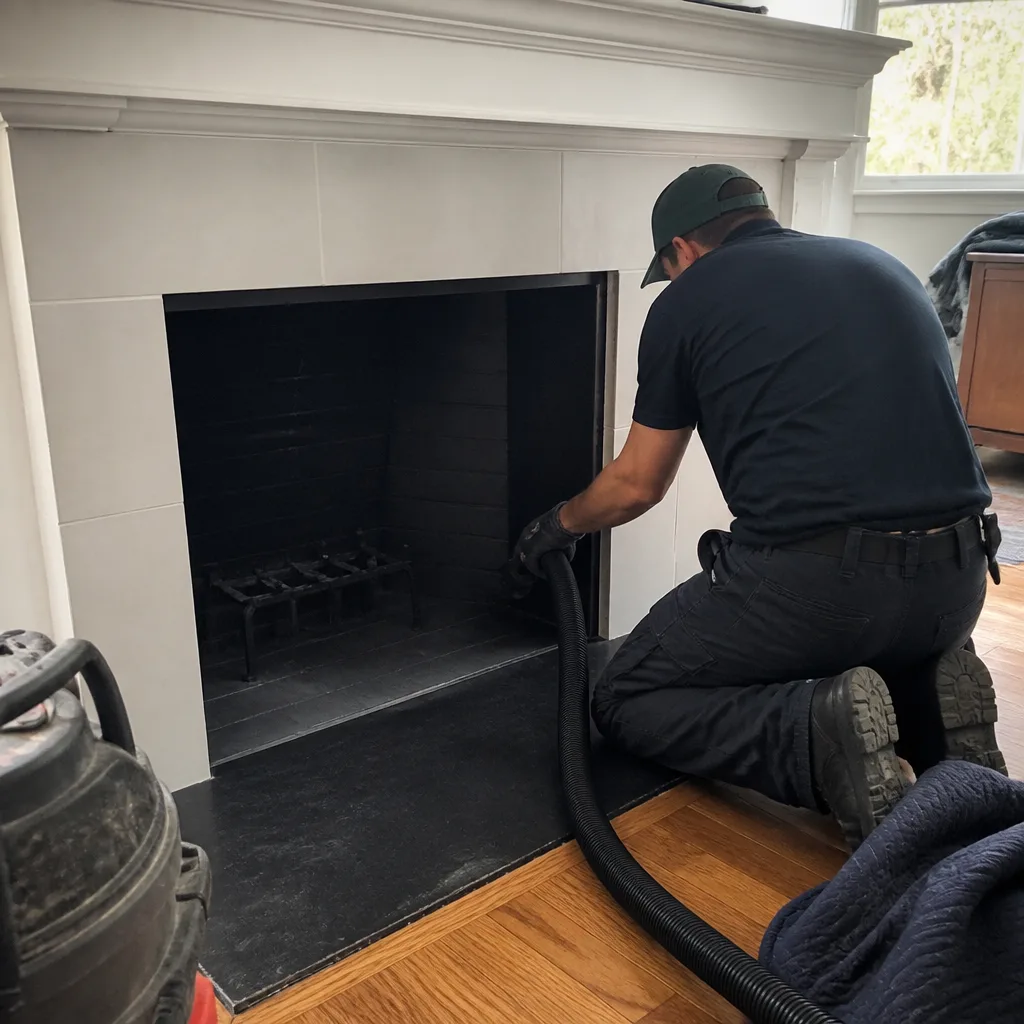 After
After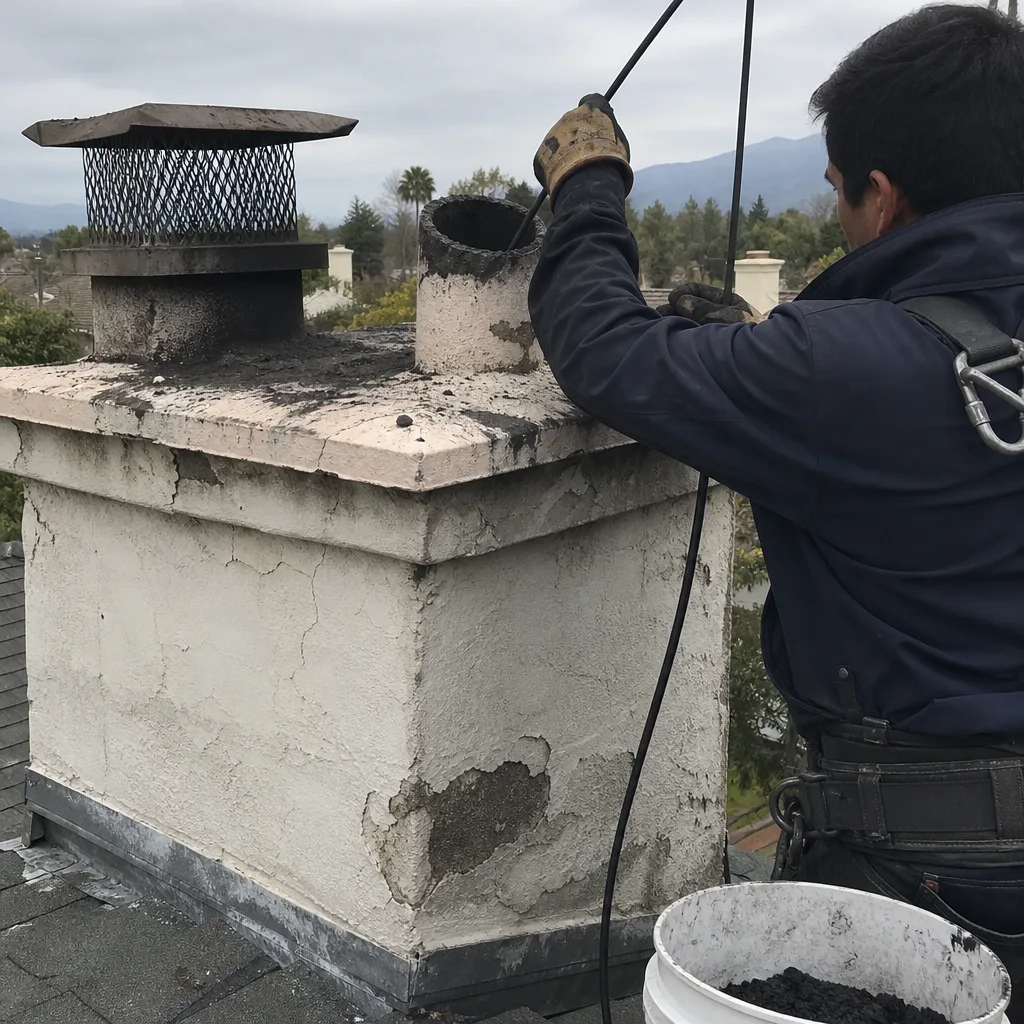 Before
 After
After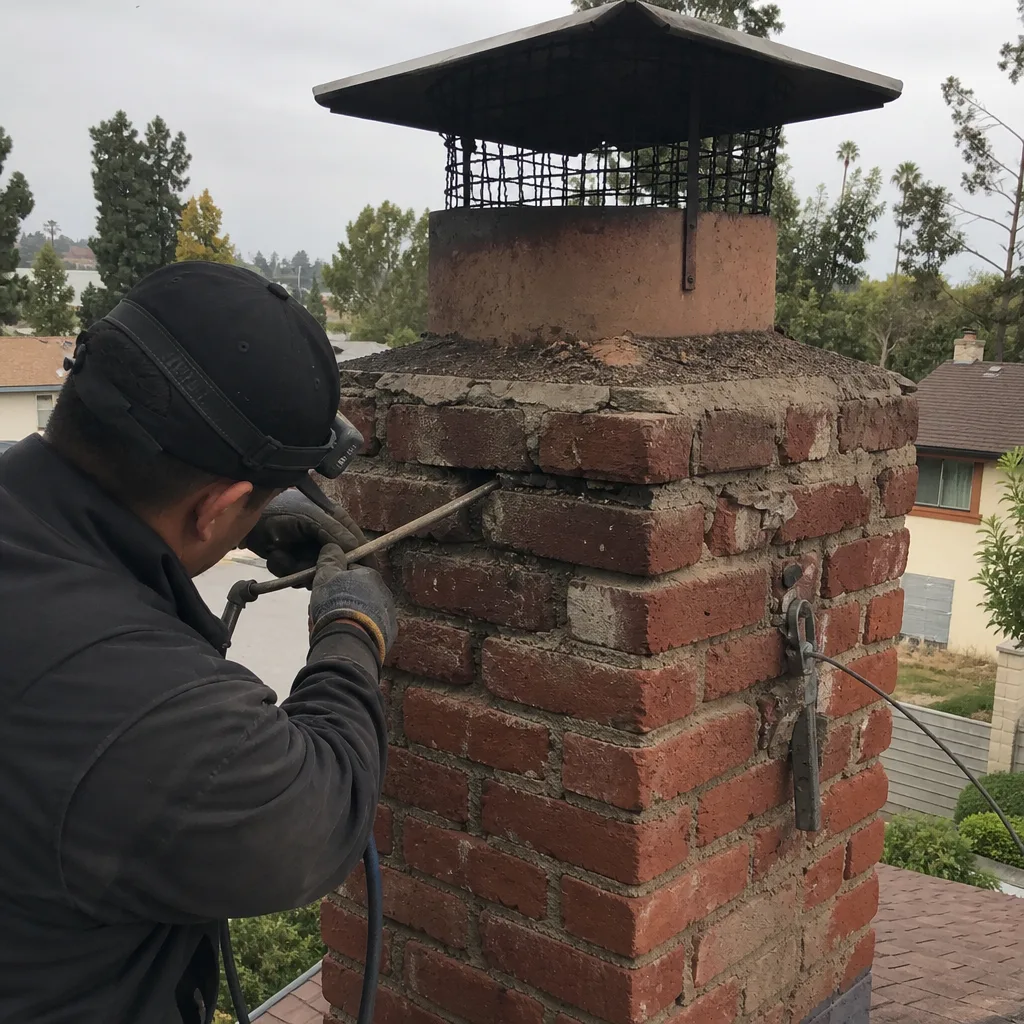 Before
 After
AfterWhen to Call a Professional
Call a professional chimney contractor when any of these applies: you’ve used the fireplace inconsistently and don’t know what’s accumulated in the flue; you notice white staining or efflorescence on the chimney exterior, which signals water intrusion; you hear dripping inside the flue during rain; you see cracked or missing mortar joints at eye level; you smell smoke in the house after a fire is long out; or you’ve bought a home in Pasadena and the seller didn’t provide a recent chimney inspection report. These are not the scenarios to work through by trial and error. A camera inspection costs less than a single emergency repair, and it answers three questions at once: is the flue safe to use, is the masonry holding up, and is any repair the chimney needs going to require a permit. Flint Chimney Co Pasadena home offers free estimates in Pasadena. Call (626) 657-5513 and a live person answers, 24 hours a day, seven days a week. No voicemail trees, no callback forms.
Frequently Asked Questions
No. Routine chimney sweeping, creosote removal, and visual inspection are permit-exempt maintenance under the California Residential Code. Permits enter the picture when structural repairs are recommended, such as flue relining, firebox rebuilding, or crown replacement.
A Level 1 inspection is a visual check for a chimney in continuous, unchanged service. A Level 2 inspection adds camera scoping of the flue interior and is required by NFPA 211 after a property sale, after a chimney fire, or after a seismic event. We recommend a Level 2 inspection for any Pasadena home purchase because it documents flue condition before you own the liability.
Yes. Homes in Pasadena’s Wildland-Urban Interface and High Fire Hazard Severity Zones must have chimney caps with compliant spark arrestors, and certain materials are restricted. A cap bought from a general hardware store may not pass a city inspection. Confirm the WUI status of the home before ordering components.
Check the City of Pasadena’s online permit portal by property address. The permit status should read “finaled” after the city inspector has approved the work. Ask your contractor for the permit number before work begins, and don’t make the final payment until you’ve confirmed the final yourself.
NFPA 211 recommends inspection at least once a year, with cleaning as needed based on use. If you burn fires weekly from November through March, an annual sweep is the pragmatic standard. Light users can often go two years, but the inspection is where the real value is: it catches structural issues before they become repair projects.
You carry all the risk. Unpermitted structural work may not meet code, your homeowner’s insurance may deny a related claim, and an open or missing permit becomes a title disclosure issue when you sell. The permit is cheap insurance compared to the liability of unverified work. Call (626) 657-5513 and we’ll tell you straight whether the job needs one.
The Bottom Line
Chimney cleaning in California requires no permit, no special license, and no fire department sign-off. The repairs a good sweep discovers during that cleaning often do require permits, and the line between “service” and “structural” is where homeowners get caught. Know the distinction, verify permit status on any repair, confirm the final before you pay, and don’t let anyone do structural chimney work without a camera and a written report. For more guides & resources on protecting your home and budget, explore our blog. In Pasadena, the fire zone overlays add a layer of material requirements that out-of-town contractors miss. Work with a company that works in Pasadena, puts everything in writing under The Garrison Standard, and backs repairs with the 365-Day Done Right Promise. If it’s not done right, we make it right, and the guarantee says so in writing.
Written by Hank Delano, Owner at Flint Chimney Co Pasadena, serving Pasadena since 2002.